Welcome to our new website!


At most events, branded apparel is easy to spot, teams wearing logos, coordinated pieces, and familiar formats like polos or jackets. But not all of it is approached the same way. Some companies keep things consistent across the board, while others adapt how their brand shows up depending on the setting, the role, or the purpose behind what’s being worn.
At events, what a team is wearing often becomes part of the first impression, sometimes before any conversation takes place. Consistency across a group can signal organization and professionalism, while more considered choices in style, colour, or placement can differentiate one team from another without needing to be overemphasized.
Not every approach needs to look the same.Some companies opt for standard pieces, while others adjust their apparel depending on the setting or audience. This can show up in more subtle ways, such as adjusting where a logo appears or choosing garments that better suit the environment.
What stands out most in these settings is rarely the most prominent branding. It’s the thought behind how the apparel supports the team’s presence.

Outside of events, branded apparel continues to play a role in how a business is represented, particularly in front-facing positions such as administration, sales, or customer service. In these settings, what employees wear becomes an extension of the company’s overall presentation.
Rather than treating all apparel the same, some businesses take a more tailored approach depending on the role. Office-based teams may lean toward more polished, business-casual pieces while still maintaining a consistent brand presence. This creates cohesion without requiring every department to follow the same format.
The result is a more consistent experience, where the brand is visible but still aligned with the expectations of the environment.

For many organizations, onboarding is one of the first touch points where branded items are introduced. Whether it’s a piece of apparel, a small set of materials, or a combination of both, these items are often distributed from the start as part of a structured process.
In this setting, the focus is less on variety and more on consistency.Standardized selections ensure that new employees receive the same items, with branding applied in the same way. This reduces variability and reinforces a consistent presentation across the team from day one.
Depending on the role, these items may also serve a practical purpose early on, whether for client-facing interactions or regular use within the workplace.

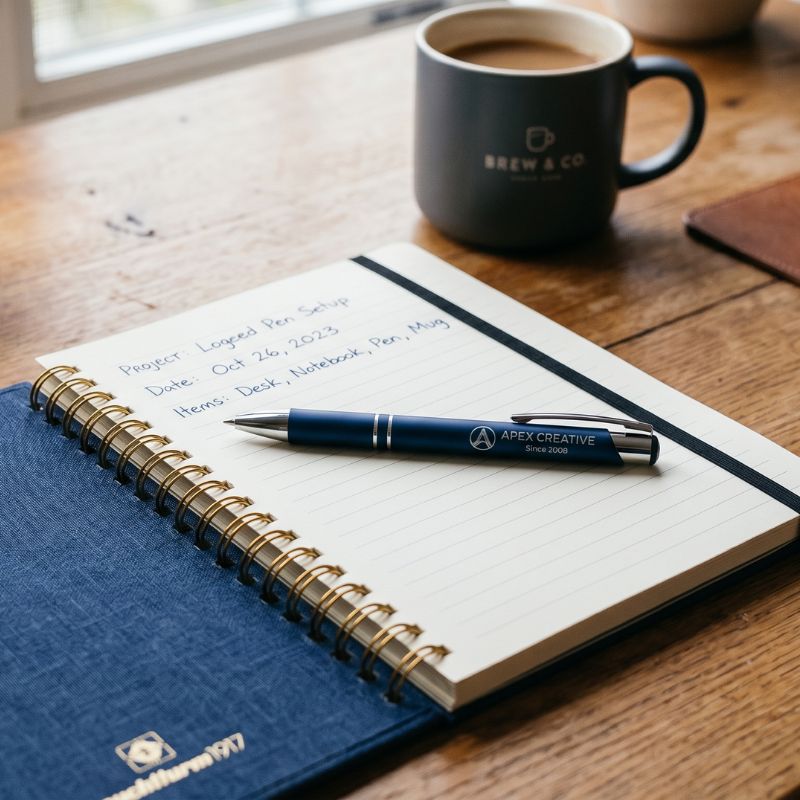
Branded apparel is not the only way companies represent their brand. Promotional products often show up in informal, day-to-day settings, on desks, in vehicles, or carried between locations where they’re used without much thought.
Because of this, the focus shifts toward selecting items that people are likely to keep and use regularly. Practical products like drinkware, bags, or notebooks tend to stay in use longer, allowing the brand to be seen more often without any additional effort.
Instead of prioritizing uniformity, these items are chosen based on how they fit into a person’s routine. When something is useful enough to remain in use, the branding becomes part of the background rather than the main feature.
While most branded apparel and promotional products are used internally, some businesses reach a point where their branding carries recognition beyond their team. In these cases, branded items may be worn or shared by customers, not just employees.
To maintain clarity, what’s used internally typically remains distinct. Employee apparel stays consistent and identifiable, while externally shared items take on a different format or design.
This can include variations tied to a specific initiative, milestone, or setting, rather than applying the same logo across every piece.
It’s not a fit for every business, but when it aligns, it allows branded items to be used more broadly without creating confusion around how they represent the company.

Branded apparel and promotional products work best when they’re used with a clear purpose behind them. The way they show up at events, in day-to-day roles, during onboarding, or through practical items reflects how a business chooses to represent itself in different settings.
Those differences don’t need to be complex, but they do need to be considered. What works in one situation may not make sense in another.
When the right items are used in the right way, the difference becomes noticeable without being overdone.
If you’re planning an upcoming order or reviewing what you currently use, we can help you sort through a few options that align with how your team operates.
